
Our History
- Our Bank
- Who we are
With a presence in Cyprus since 1910, National Bank of Greece is a trusted and enduring financial partner with a distinguished history and a dynamic vision. From the era of British rule until today, we have supported our society, entrepreneurship, and the growth of the local economy, while strengthening the bonds between Greece and Cyprus. A milestone for us came in 1994, when our branch network in Cyprus became an independent legal entity.
Today, we operate under a modern business model, with primary focus on the needs of businesses, but also serving individuals and international clients. We provide comprehensive solutions in corporate financing, transactional banking, and trade finance, as well as deposit products and cards. At the same time, we invest continuously in digital transformation, improving your experience and expanding the products and services we offer through our digital channels.
As part of the NBG Group, we leverage the strength and know-how of an international Group, combining our local presence with global expertise. We employ more than 140 people and operate two central branches in Nicosia and Limassol. Our Head Office is housed in a historic, restored building on Makariou Avenue in Nicosia.
With steadfast commitment to responsibility, reliability, and efficiency, we continue to support the growth, sustainability, and progress of our clients and the society we serve.
Throughout our 184 years of operation, in parallel with the newly-established Greek state, we always strive to be present at each small or big venture of our country, by supporting its financial and social growth efforts.
Guided by our values, we set the foundations for entrepreneurial growth, we encourage innovation and technology, and we stand by society, the environment and culture.
Today, we move forward with vision and optimism. We open new paths, by moving forward to the new digital era and by providing new solutions and prospects for people and the economy as a whole.
Embark on our journey through 184 years of history, by revisiting our most important milestones.

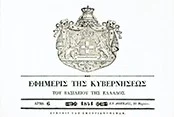
30 March 1841: The bank is established as a société anonyme and is headquartered at the capital.
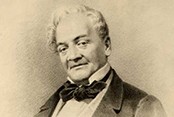
Ο Γεώργιος Σταύρος, πρώτος Διοικητής της τράπεζας, εδραιώνει τον τραπεζικό θεσμό, καθιερώνει την κυκλοφορία τραπεζογραμματίου και επεκτείνει την τράπεζα με 15 υποκαταστήματα στην Ελλάδα.

Η Εθνική Τράπεζα συμβάλλει στην πολιτισμική ανάπτυξη της χώρας ενισχύοντας την κατασκευή του Εθνικού Θεάτρου στην Αθήνα.

12 Μαΐου 1880, εισαγωγή της μετοχής στην επίσημη ημερομηνία έναρξης λειτουργίας του Χρηματιστηρίου

Η Τράπεζα ενισχύει οικονομικά την εταιρεία του Ισθμού της Κορίνθου. Για την ολοκλήρωσή του, το 1907 ιδρύει την «Νέαν Ανώνυμον Εταιρεία της Διώρυγος της Κορίνθου».
Η Τράπεζα χρηματοδοτεί τους σταφιδοπαραγωγούς για να αντιμετωπιστεί η σταφιδική κρίση. Παράλληλα ενισχύει οικονομικά τους σεισμοπαθείς Ζακύνθου και Λακρίδας και συμβάλλει στην ανοικοδόμηση της Θεολογικής Σχολής της Χάλκης.

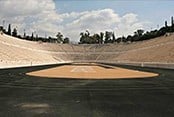
Η Τράπεζα ενισχύει οικονομικά την προετοιμασία διοργάνωσης των πρώτων σύγχρονων Ολυμπιακών Αγώνων της Αθήνας.
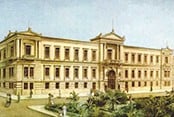
Ολοκληρώνεται η ανακατασκευή του κεντρικού καταστήματος, το οποίο αποκτά την επιβλητική μορφή που έχει ακόμη και σήμερα.
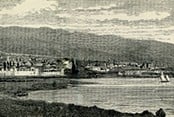
Το δίκτυο της τράπεζας κυριαρχεί στο ελληνικό τραπεζικό σύστημα, καθώς περιλαμβάνει τα 45 από τα 59 τραπεζικά καταστήματα που λειτουργούν στη χώρα.

30 Μαρτίου 1841: η Τράπεζα ιδρύεται και αποτελεί ανώνυμη εταιρεία με έδρα την πρωτεύουσα.
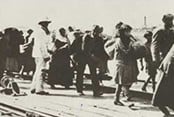
Η τράπεζα στηρίζει ενεργά την αποκατάσταση των προσφύγων της Μικρασιατικής καταστροφής.
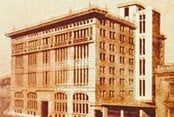
Η τράπεζα εμφανίζεται για πρώτη φορά στο εξωτερικό με τη λειτουργία πρακτορείου στη Νέα Υόρκη.
Η τράπεζα της Ελλάδος ξεκινά τη λειτουργία της, ενώ η Εθνική τράπεζα την ενισχύει με κεφάλαιο και προσωπικό. Ταυτόχρονα η Εθνική Τράπεζα παραιτείται από το εκδοτικό της προνόμιο.

Ιδρύεται το ιστορικό αρχείο της Εθνικής Τράπεζας.
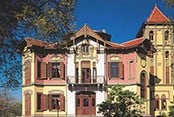
Με αφορμή τον εορτασμό των 125 ετών λειτουργίας της, η τράπεζα ιδρύει το Μ.Ι.Ε.Τ. Έτσι, συνεχίζει έκτοτε να συμβάλλει στην Επιστήμη και τον Πολιτισμό.
Κυκλοφορεί η πρώτη πιστωτική κάρτα στην Ελλάδα και η τράπεζα εισάγει τον θεσμό της καταναλωτικής πίστης. Για πρώτη φορά στην Ελλάδα η Εθνική Τράπεζα δημιουργεί το σύγχρονο σύστημα συναλλαγών real-time.
Για πρώτη φορά στην Ελλάδα η τράπεζα εγκαθιστά τα σύγχρονα μηχανήματα αυτόματης συναλλαγής ΑΤΜ.
Η μετοχή της Εθνικής Τράπεζας διαπραγματεύεται πλέον στο Χρηματιστήριο της Νέας Υόρκης.
Η τράπεζα εξαγοράζει σημαντικές τράπεζες στη Βουλγαρία, τη Ρουμανία, την Π.Γ.Δ.Μ., τη Σερβία και την Τουρκία, στηρίζοντας την ελληνική επιχειρηματική δραστηριότητα στη Ν.Α. Ευρώπη.
Η τράπεζα ενισχύει τους 43 πυρόπληκτους Δήμους της Πελοποννήσου και της Εύβοιας με την άμεση διάθεση €25.000.000, με σκοπό την αποκατάσταση των περιοχών μετά τις καταστροφικές πυρκαγιές του Αυγούστου.

Ολοκληρώνεται η ανέγερση της νέας πτέρυγας σύγχρονων χειρουργείων στο νοσοκομείο «Ευαγγελισμός», με τη δωρεά €30.000.000 από την τράπεζα. Έτσι αναβαθμίζονται σημαντικά οι παρεχόμενες υπηρεσίες υγείας και περίθαλψης.
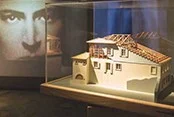
Εγκαινιάζεται ως ένα πρωτοποριακό μουσείο το ακίνητο που αποτελούσε την πατρική κατοικία του Άγγελου Σικελιανού και παραδίδεται ως προσφορά στον Δήμο Λευκάδας. Την ίδια χρονιά η τράπεζα συνδράμει σημαντικά στη χρηματοδότηση κατασκευής της Ολυμπίας Οδού.
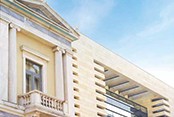
Η τράπεζα συνεχίζει με αμείωτους ρυθμούς το φιλόδοξο πρόγραμμα μετασχηματισμού της, με στόχο τον διαρκή εκσυγχρονισμό, τη συνεχή συνεισφορά στην ανάπτυξη της οικονομίας και τη βελτίωση της εμπειρίας εξυπηρέτησης.

30 March 1841: The bank is established as a société anonyme and is headquartered at the capital.

Georgios Stavros, the first Governor of the bank, consolidates the banking institution, establishes the circulation of banknotes and expands the bank by opening 15 branches throughout Greece.

NBG contributes in the cultural development of the country by supporting the construction of the National Theater in Athens.
12 May 1880: the shares are listed on the official opening date of the Stock Exchange.

The bank provides financial support to the Isthmus of Corinth company. For its completion, the bank establishes the “New Corinth Canal société anonyme” in 1907.
The bank finances the raisin producers in order to help manage the raisin production crisis. At the same time, the bank provides financial aid to the people of Zakynthos and Lakrida that were affected by the earthquakes and contributes financially to the reconstruction of the Theological School of Halki.

The bank provides financial support for the preparation of the first modern Olympic games, hosted by the city of Athens.

The reconstruction of NBG’s main building is completed and gets its grandiose facade that is preserved to this day.
The bank’s network dominates the Greek banking system, as it includes 45 out of the 59 bank branches that operate in the country.

The bank contributes in the rebuilding of Thessaloniki after the big fire of 1917.

The bank supports actively the rehabilitation of the refugees of Asia Minor catastrophe.
The bank marks its presence abroad for the first time, through the operation of an agency located in New York.
The bank of Greece begins its operations, while NBG provides funds and personnel. At the same time, NBG waived its banknote issuing privileges.

The NBG historical archive is founded.

In commemoration of its 125 years of operation, the bank establishes the NBG Cultural Foundation. Since then, NBG incessantly continues to promote Science and Culture.
The first credit card in Greece is issued and the bank introduces the institution of consumer credit. For the first time in Greece, NBG creates the modern real-time transaction processing system.
For the first time in Greece, the bank installs the modern automated teller machines (ATMs).
NBG’s stock is now listed and traded in the New York Stock Exchange.
The bank acquires important banks in Bulgaria, Romania, FYROM, Serbia and Turkey, thus supporting Greek business activities in S.E. Europe.
The bank provides financial support to 43 fire-stricken municipalities of Peloponnese and Evia, by disbursing €25.000.000, aiming to the restoration of said areas after the catastrophic fires that took place in August.

NBG granted €30.000.000 for the completion of the construction of a new operating room wing at the Evaggelismos Hospital. This is an important upgrade to the provided health and hospitalization services.

Angelos Sikelianos’ family home is inaugurated as a pioneering museum and gifted to the Municipality of Lefkada. In the same year, the bank provides substantial financial contribution for the construction of Olympia Odos.

The bank continues incessantly its ambitious transformation program, aiming at its continuous modernization, its constant contribution to the development of the economy and the improvement of its customer service experience.
